
Automotive Component Press Line Automation: BS EN ISO 16092 Safety, Servo Feeds & Tonnage Monitoring
Turnkey mechanical, hydraulic, and servo press line automation engineered specifically for UK Tier 2 and Tier 3 automotive component suppliers. MASK integrates dual-monitored clutch/brake safety valve blocks, Cat 4 PLe safety PLCs, synchronized high-speed servo roll feeds, electronic rotary camming, in-die crash protection, and stroke-by-stroke piezoelectric tonnage monitoring.
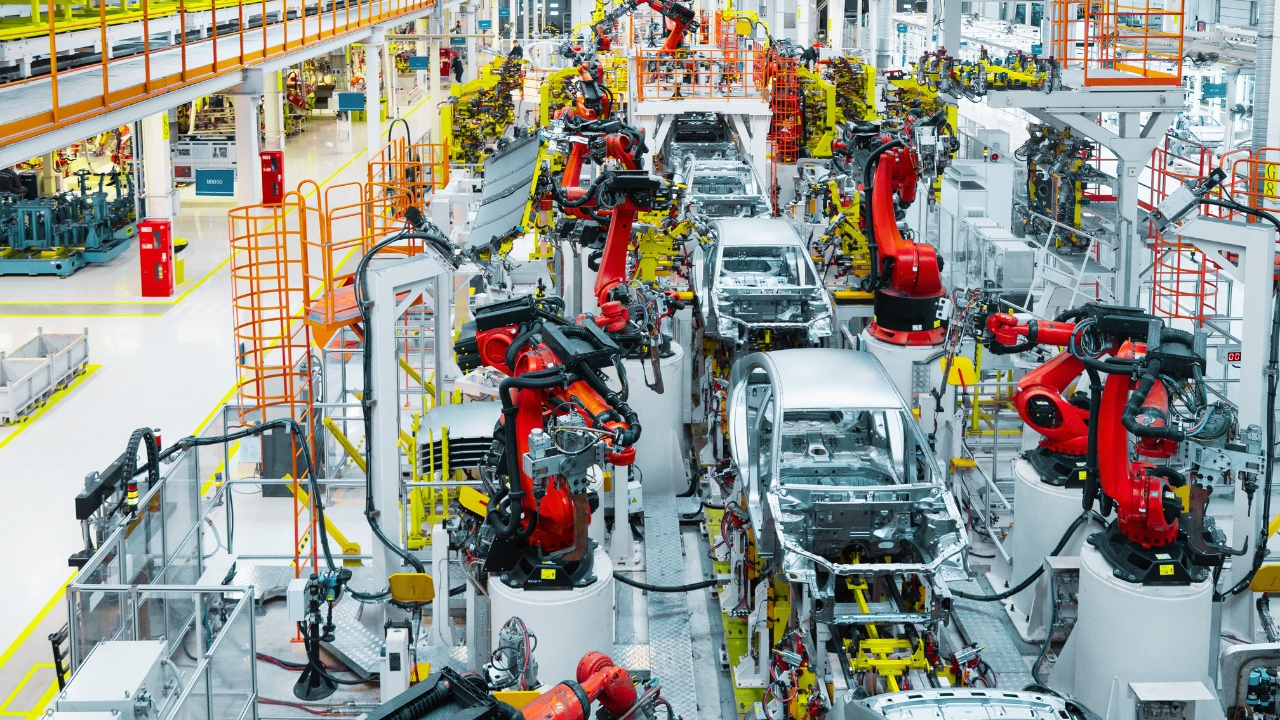
The High-Stakes Demands on UK Automotive Stamping & Press Lines
For Tier 2 and Tier 3 automotive press shops producing structural brackets, deep drawn enclosures, and chassis stampings, equipment downtime is catastrophic. When an OEM or Tier 1 assembly plant runs Just-in-Time (JIT) schedules, an unplanned line stoppage carries thousands of pounds per minute in penalties. Yet, hundreds of UK press shops still run mechanical presses with obsolete electro-mechanical cam switches, worn clutch valves, and zero digital stroke trace data.
Die Crashes & Massive Tooling Cost
A misfed blank, broken slug, or jammed stripper plate that is not caught within a single stroke will crush hardened progressive dies. Repairing or rebuilding multi-stage tooling costs between £30,000 and £150,000, while idling the press line for weeks.
HSE PUWER & ISO 16092 Non-Compliance
Mechanical and hydraulic presses represent the highest mechanical hazard in automotive manufacturing. Aging relay-based safety circuits, single-channel pneumatic valves, and unmonitored clutch overrun cams risk severe HSE prohibition notices and catastrophic operator injury.
Scrap Bursts & Lack of IATF Traceability
Material thickness variations, improper coil lubrication, or burrs can result in thousands of out-of-tolerance stampings before manual spot checks catch the fault. Automotive OEMs require automated stroke-by-stroke tonnage curves and serialised part verification.
Legacy Relay / Mechanical Cam Setup vs MASK Modern Integrated Press Architecture
Comparing outdated press electrical controls with our engineered Cat 4 PLe servo-synchronized platform.
| System Component | Legacy Press Setup (Pre-2005) | MASK Press Automation Architecture |
|---|---|---|
| Press Safety System | Hardwired relays, single clutch valve, mechanical limit switches. High failure rate. | Fail-safe GuardLogix / S7-1500F PLC, dual monitored valve blocks to BS EN ISO 16092 Cat 4 PLe. |
| Crank Angle & Timing | Mechanical rotary cam box with microswitches. Difficult setup, drift over time. | Dual redundant absolute multi-turn encoders with digital dynamic overrun angle tracking at TDC. |
| Coil Feeding Method | Mechanical gripper feeds or pneumatic hitch feeds. Inflexible pitch and high strip marking. | Synchronized servo roll feed, electronic camming profile, laser loop control, ±0.02 mm repeatability. |
| Tooling Protection | Operator visual checks or basic microswitches. No automated crash prevention. | High-speed optical/inductive in-die sensors (<2ms response) + 4-channel piezo tonnage curve monitoring. |
| Die Recipe Management | Manual adjustments of shut height, stroke speed, cam angles, and feed length (1-2 hours). | Touchscreen HMI recipe recall in seconds: automated shut height, servo pitch, lubrication, cam limits. |
| Quality & Traceability | Manual paper inspection sheets. Defect batches discovered after downstream assembly. | 100% stroke data logging, 2D DataMatrix vision verification, automatic scrap gate diverter interlock. |
Five Technical Pillars of Automotive Press Line Automation
Whether retrofitting a 500-tonne mechanical eccentric press or commissioning a fully automated 5-press tandem transfer line, our systems integrate rigorous safety standards, high-speed motion control, and automotive IATF 16949 traceability.
BS EN ISO 16092 & BS EN ISO 13849-1 Cat 4 PLe Press Safety Architecture
Under BS EN ISO 16092 (Parts 1, 2, and 3), press control systems must guarantee that no single electrical, hydraulic, or pneumatic fault leads to an unintended stroke. We design and install dual-channel monitored clutch/brake valves (Ross, Herion, Festo) equipped with dynamic spool position switches cross-monitored by fail-safe safety PLCs on every cycle.
Servo Coil Feed Synchronization & Electronic Rotary Camming
Maximising strokes per minute (SPM) without tearing coil strip or inducing pitch drift requires precision electronic camming. We synchronize servo roll feeds with the crank shaft angle using dynamic motion profiles. Feeding accelerates, stabilises, and decelerates precisely inside the safe die opening angle (e.g., 270 degrees to 90 degrees), with automatic pilot-pin release actuation.
In-Die Sensing & Sub-Millisecond Catastrophic Tooling Protection
Tooling protection is the front line of press shop profitability. MASK designs dedicated high-speed sensor junction boxes and fail-safe PLC logic that monitor optical part pass sensors, inductive stripper position detectors, feed-to-end-stop lasers, and scrap chute photocells. If a part fails to eject or a slug accumulates, the press clutch drops out instantly before bottom dead centre (BDC).
Acoustic & Piezoelectric Tonnage Monitoring with Envelope Alarms
Piezoelectric strain gauge sensors bonded to the press columns measure real-time tonnage distribution across 2 or 4 points (front-left, front-right, rear-left, rear-right). The system captures signature force-displacement curves for each stroke, checking against dynamic upper and lower limits. Hard spots, double blanks, worn punches, and snap-through reverse loads are instantly identified.
Robotic Destack, Press-to-Press Transfer & Traceability Interfacing
Automating tandem press lines requires tight coordination between press automation and multi-axis robotics (Fanuc, ABB, KUKA, Yaskawa). We engineer safety handshakes to EUROMAP 67 and ISO 13849, blank sheet de-oiling/centering tables, double-blank thickness detectors, robotic press loaders/unloaders, scrap shaker conveyors, and automated laser marking stations.
Mechanical vs Hydraulic vs Servo Press Control Requirements
Each press classification presents unique kinetic, thermal, and hydraulic safety challenges. Here is how MASK configures control architectures across all three core press types:
| Specification Parameter | Mechanical Stamping Press | Hydraulic Deep-Draw Press | Servo Direct-Drive Press |
|---|---|---|---|
| Applicable Safety Standard | BS EN ISO 16092-2 (Mechanical) | BS EN ISO 16092-3 (Hydraulic) | BS EN ISO 16092-1 / 16092-2 (Servo Drive) |
| Primary Braking / Stopping | Pneumatic/hydraulic friction clutch-brake with dual monitored valves | Dual monitored hydraulic restraint valves and safety shut-off blocks | Regenerative electronic servo braking + fail-safe mechanical holding caliper |
| Ram Motion Flexibility | Fixed sinusoidal eccentric curve determined by crankshaft geometry | Variable velocity and pressure control across entire stroke profile | Fully programmable motion profiles: pendulum, dwell, coining, and slow-touch |
| Die Cushion Control | Pneumatic manifold or self-contained hydraulic cushion with relief valves | Proportional hydraulic servo valve closed-loop force/displacement regulation | Synchronized multi-axis servo electric or electro-hydraulic CNC cushion |
| Tonnage Monitoring Dynamics | Peak force spikes near BDC; high risk of reverse snap-through shock | Continuous hydraulic pressure vs ram displacement monitoring across draw | Torque feedback combined with column strain gauges for 100% stroke envelope |
| Typical MASK Platform | Rockwell Compact GuardLogix + Ross dual valve + Kinetix roll feed | Siemens S7-1500F + Moog/Rexroth proportional valve amplifier + WinCC HMI | Siemens Simatic Press Line Suite + Sinamics S120 multi-axis servo drives |
Engineered with Industry-Standard Press Automation Platforms
We design and build bespoke control panels adhering to BS EN 60204-1 and BS EN 61439, utilizing the exact hardware architectures mandated by leading automotive OEMs (JLR, BMW, Nissan, Aston Martin, Bentley):
Rockwell Allen-Bradley GuardLogix
GuardLogix 5580 and Compact GuardLogix 5380 safety controllers with CIP Safety over EtherNet/IP, Point Guard I/O, and Kinetix 5700 high-speed servo feed synchronization.
Explore Allen-Bradley ServicesSiemens SIMATIC S7-1500F Safety
S7-1500F fail-safe CPUs with ET 200SP Safety I/O, Sinamics S120 multi-axis drive systems, PROFIsafe, and Siemens Simatic Press Line Suite for dynamic camming and recipe storage.
Explore Siemens ServicesPilz PNOZmulti 2 Press Safety
Dedicated Pilz PNOZmulti 2 configurable press safety controllers with dual rotary encoder interfaces, dynamic muting, overrun monitoring, and direct dual valve block control.
Control Panel Design ServicesOur 5-Stage Press Modernisation & Retrofit Methodology
Upgrading safety-critical press machinery requires meticulous engineering to avoid production disruptions. MASK executes retrofits during planned holiday shutdowns or weekend windows:
PUWER & Safety Audit
On-site mechanical stop-time measurement, valve response profiling, risk assessment to BS EN ISO 16092, and optical safety distance recalculation.
EPLAN Schematics & Build
Full CAD electrical schematics to BS EN 60204-1, panel layout, Form 2/4 separation, and in-house workshop assembly with factory acceptance testing (FAT).
Fail-Safe Software Design
Safety PLC logic programming, electronic cam profiling, touchscreen recipe systems, and sub-millisecond in-die protection interrupt routines.
On-Site Turnkey Installation
Old panel strip-out, rewiring, installation of dual monitored valve blocks, resolver mounting, and optical light curtain rigging during planned plant windows.
Die Tryout & Sign-Off
Dynamic stroke stop-time verification, tonnage calibration, live die tryout with production coils, operator training, and CE/UKCA technical file sign-off.
Automotive Press Automation Questions Answered
Detailed technical guidance on press safety upgrades, stop-time calculations, and tooling protection for UK automotive suppliers.
What safety standards govern automotive mechanical and hydraulic press retrofits in the UK?
How does MASK handle stop-time performance testing and light curtain safety distance calculation?
How do in-die sensors and tonnage monitors prevent catastrophic tooling damage?
Can MASK synchronize servo roll feeds with existing mechanical crank presses?
What PLC platforms do you deploy for automotive press line automation?
How is part traceability and IATF 16949 compliance recorded during stamping?
Explore More Automotive & Control Solutions
Discover how MASK delivers turnkey automation, robotics, and safety compliance across the UK manufacturing sector:
Automotive Tier 2/3 Automation
Robotic welding cells, automated assembly fixtures, and vision inspection systems for UK automotive component suppliers.
Allen-Bradley GuardLogix
Studio 5000 safety logic, CIP Safety motion control, and Kinetix servo integration for high-speed press automation.
Siemens S7-1500F Safety
TIA Portal fail-safe programming, PROFIsafe distributed I/O, and Sinamics multi-axis servo press synchronisation.
Safety PLC vs Safety Relay
In-depth guide to BS EN ISO 13849-1 Cat 4 PLe safety architecture selection for industrial machinery and press brakes.
Modernise Your Automotive Press Line Without Disrupting Production
Whether you need a dynamic stop-time assessment to BS EN ISO 13855, a complete Cat 4 PLe safety PLC retrofit, or high-speed servo feed synchronization, MASK delivers turnkey engineering backed by over 20 years of UK manufacturing experience.