
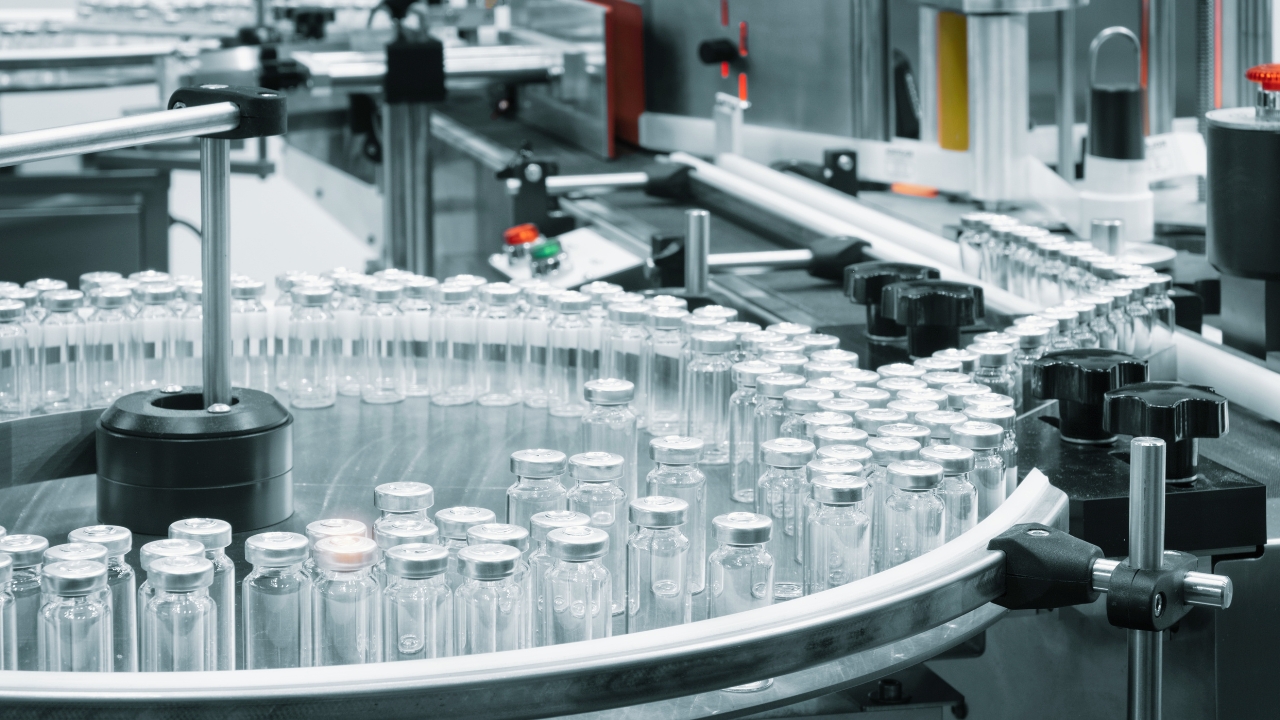
Cleanroom HVAC & Differential Pressure Cascade Automation Systems
Bespoke cleanroom HVAC control panels, automated differential pressure cascade loops, closed-loop psychrometric temperature-humidity regulation, and 21 CFR Part 11 validated environmental monitoring systems (EMS) engineered for UK pharmaceutical facilities, aseptic fill-finish suites, and biotech laboratories.
Engineering Specifications
- Cleanroom Standard:ISO 14644-1 (ISO 5-8)
- GMP Classifications:EU GMP Grade A, B, C, D
- Pressure Differential:10 to 15 Pa Cascades
- Temperature Tolerance:±0.5°C Closed-Loop PID
- Relative Humidity:±3% RH Psychrometric Trim
- Data Integrity:FDA 21 CFR Part 11 / Annex 11
- Door Interlocks:PAL / MAL Airlock Mag-Locks
Precision Air Handling & Pressure Cascade Integrity for Regulated Environments
In pharmaceutical manufacturing, biotechnology suites, and aseptic compounding rooms, maintaining strict air pressure differentials is the primary physical defense against airborne cross-contamination. Under revised EU GMP Annex 1 guidelines, cleanroom operators face tightened scrutiny regarding continuous pressure recording, air velocity profiles, HEPA filter integrity, and airlock door discipline.
MASK Control Systems designs and integrates fully validated PLC-based cleanroom HVAC and Environmental Monitoring Systems (EMS). By decoupling critical regulatory monitoring from general building automation, we provide life sciences manufacturers with ultra-stable differential pressure cascades (±1 Pa control accuracy), rapid-response VAV air velocity control, and 21 CFR Part 11 compliant audit trails that guarantee seamless MHRA and FDA inspection readiness.
Engineered Pressure Cascades: Positive vs Negative Regimes
Designing air pressure hierarchies that balance operator safety, biological containment, and sterile product integrity across all classified zones.
Positive Pressure Cascades (Grade A / B / C / D)
Used in sterile fill-finish suites, sterile powder compounding, and medical implant packaging. The highest cleanliness zone (Grade A/B) is maintained at the highest static pressure (+45 to +60 Pa relative to ambient), cascading down through Grade C (+30 Pa), Grade D (+15 Pa), and unclassified corridors.
Negative Pressure Cascades (BSL-2/3 & HPAPI)
Engineered for High-Potency Active Pharmaceutical Ingredients (HPAPI), cytotoxic vial filling, viral vector gene therapies, and biosafety laboratories. The active processing suite is held negative relative to surrounding buffer zones to prevent airborne biological or chemical escape.
Automated Personnel (PAL) & Material (MAL) Airlock Door Interlocking
Pressure cascades immediately fail if opposing airlock doors are opened simultaneously. MASK engineers integrated door management panels featuring 1200 lb electromagnetic locks, capacitive push buttons, LED status beacons (Green = Free to Enter, Red = Locked / Flushing), and adjustable purge delay timers. Control algorithms notify operators of door hold-open violations through audible sounders and SCADA event logs before room pressure decays.
High-Precision AHU Automation & Psychrometric Control
Regulating variable air volume dampers, EC plug fan arrays, chilled water cooling coils, and clean steam humidification for tight microclimate tolerances.
VAV & EC Fan Array Regulation
Cleanrooms require massive volumetric throughput (20 to 60+ Air Changes per Hour). We integrate multi-fan EC plug fan arrays over high-speed Profinet/Modbus networks. If an individual fan module faults, the remaining fans dynamically ramp up within 500 milliseconds to preserve supply CFM without pressure drop.
- N+1 Fan Array Redundancy
- Fast-Acting VAV Dampers (<3s stroke)
- Night Setback & Unoccupied Eco Modes
Temperature & Humidity PID Loops
Tight environmental control (19°C to 21°C ±0.5°C and 45% to 55% RH ±3%) is vital for pharmaceutical tablet formulation, moisture-sensitive powders, and operator comfort under bunny suits. We program decoupled cascade PID loops coordinating chilled water coils, electric heaters, and steam humidifiers.
- Chilled Water Dehumidification Reheat
- Clean Steam / Ultrasonic Humidifier Trim
- Psychrometric Dew-Point Calculations
HEPA / ULPA Filtration Monitoring
Terminal H14 HEPA (99.995%) and U15 ULPA filters require continuous differential pressure surveillance across their life cycle. Piezoresistive differential pressure transmitters (0 to 500 Pa) track filter loading, triggering preventative maintenance warnings before face velocity collapses below 0.36 to 0.54 m/s.
- Filter Clogging Pre-Alarms & Trip Limits
- EN 1822 / ISO 29463 Verification Support
- DOP / Emery Aerosol Test Port Integration
FDA 21 CFR Part 11 & Annex 11 Environmental Monitoring Systems (EMS)
While a standard Building Management System (BMS) manages utility equipment for operational efficiency, an Environmental Monitoring System (EMS) directly influences product quality and batch release. Under Good Automated Manufacturing Practice (GAMP 5), MASK engineers segregated, fully validated EMS architectures.
Immutable Audit Trails & E-Signatures
Every parameter adjustment, setpoint change, alarm acknowledgment, and calibration offset is recorded with user ID, timestamp, old value, new value, and mandatory reason for change.
Particle Counter & Microbiological Sampling
Direct integration with continuous airborne optical particle counters (0.5µm & 5.0µm) and viable microbial samplers with automated Grade A/B alert threshold excursion triggers.
Redundant Historians & NTP Time Sync
Dual SQL database historians with automated failover and Network Time Protocol (NTP) synchronization ensure all PLCs, HMIs, and SCADA servers share identical millisecond timebases.
BMS vs EMS Architecture Matrix
| Attribute | Cleanroom BMS | Validated EMS |
|---|---|---|
| Primary Purpose | Equipment control & energy | GMP Product release records |
| Regulatory Impact | Non-GMP / Indirect impact | Direct GMP Critical Quality |
| 21 CFR Part 11 | Not typically enforced | Strictly mandatory |
| Data Storage | Cyclic standard buffer | Cryptographic tamper-proof |
| Calibration Traceability | Annual standard check | ISO 17025 accredited points |
| Change Control | Engineering log | Formal QA change control (CC) |
AHU Redundancy, Smoke Purge & Emergency Containment
Automated safety interlocks engineered to protect human operators, prevent loss of multimillion-pound batch stock, and meet strict UK building safety codes.
Bumpless Duty/Standby AHU Switch
Critical sterile suites cannot tolerate fan downtime. If primary air handling encounters a belt snap, drive fault, or static duct pressure decay, the PLC commands standby AHU damper actuators to open while soft-starting its VFD. Cleanroom pressure cascade differentials remain within validated boundaries throughout transition.
Fire Damper & Smoke Purge Loops
Hardwired interlocks connected to the site Fire Alarm System (FAS) command spring-return motorized fire and smoke dampers to slam closed within seconds, compartmentalising fire zones. Dedicated smoke extraction modes purge contaminated cleanroom volumes post-incident without cross-contaminating adjoining suites.
Gas Spill & Biohazard Purge Modes
In biological or solvent extraction suites, ambient toxic gas sensors (O2 depletion, VOCs, CO2) or aerosol alarms trigger automated 100% full-exhaust purge cycles. Recirculation dampers snap shut, while high-capacity exhaust fans ramp to 100% speed to evacuate hazardous vapours through carbon scrubbing stages.
Supported Cleanroom Automation Platforms
We build on industry-leading, vendor-agnostic PLC and SCADA architectures trusted across UK bio-pharmaceutical manufacturing.
S7-1500 & Desigo CC
Siemens SIMATIC S7-1500 fail-safe PLCs, ET 200SP remote I/O on Profinet, and WinCC Unified or Desigo CC SCADA with native Audit viewer tools.
Siemens CapabilitiesAllen-Bradley ControlLogix
Rockwell CompactLogix 5380 and ControlLogix 5580 platforms, FactoryTalk View SE, and FactoryTalk AssetCentre for rigorous electronic change tracking.
Allen-Bradley ServicesModicon & EcoStruxure
Schneider Electric Modicon M580 ePACs, Modbus TCP instrumentation integration, and EcoStruxure Building Operation for compliant life sciences facilities.
Schneider IntegrationTwinCAT 3 & EtherCAT
High-speed PC-based automation with sub-millisecond EtherCAT I/O response, ideal for ultra-fast VAV damper regulation and precision pressure balancing.
PLC ProgrammingGAMP 5 Validation & Documentation Lifecycle
Every cleanroom control system delivered by MASK follows a rigorous V-model validation methodology from initial URS scoping to qualification handover.
URS Scoping & Risk Assessment
Translation of cleanroom design specs into functional requirements, identifying GAMP 5 category classifications and critical quality attributes (CQAs).
FDS, SDS & Panel Build
Detailed Functional Design Specifications, electrical CAD schematics, and control panel assembly at our St Helens manufacturing facility.
Rigorous FAT Protocol
Complete Factory Acceptance Testing with simulated sensor inputs, verifying pressure cascade loops, alarm trips, and door interlock sequences.
Site SAT & Commissioning
Onsite installation, loop checking, VAV balance calibration, and integration with site mechanical dampers, chillers, and steam generators.
IQ / OQ Qualification
Execution of formal Installation Qualification (IQ) and Operational Qualification (OQ) protocols, traceability matrices, and audit sign-off.
Frequently Asked Questions: Cleanroom HVAC Controls
Clear engineering insights regarding pressure cascade standards, 21 CFR Part 11 architectures, and cleanroom air handling automation.
What differential pressure cascade is required between cleanroom classifications under EU GMP Annex 1?
How does MASK ensure cleanroom pressure cascades do not collapse when doors open?
What is the difference between a Cleanroom BMS and an EMS under 21 CFR Part 11?
How does the control system handle automatic duty and standby AHU changeover without room contamination?
Can MASK integrate viable and non-viable particle counters directly into the PLC and SCADA?
What validation documentation does MASK provide for cleanroom control panel installations?
Explore More Specialized Verticals
Specialty Chemicals & Exd Batch Reactions
Modular ISA-88 batch recipe control, ATEX Zone 1/21 explosion-proof panels, and cascade jacket reactor loops.
Bespoke Cleanroom Control Panels
IP65/IP66 stainless steel enclosures, flush silicone gaskets, and compartmentalized low-voltage distribution.
Remote Cleanroom SCADA & Cloud Telemetry
Encrypted remote VPN diagnostics, SMS/email out-of-spec excursions, and automated regulatory reporting dashboards.
Ready to Upgrade or Validate Your Cleanroom HVAC Automation?
Contact our senior control systems engineers to discuss differential pressure cascade tuning, 21 CFR Part 11 EMS compliance, or turnkey AHU control panel manufacturing.
Unit 4, Enterprise Court, St Helens, WA9 5FZ • Engineering nationwide across England, Scotland & Wales