
Industrial Automation Systems: A Complete Guide to Efficiency, PLC Solutions & Modern Manufacturing
How deterministic PLC architectures, fieldbus networking, and turnkey systems integration streamline manufacturing operations, eliminate downtime, and drive long-term profitability.
MASK Control Systems Engineering Team
UK Turnkey Automation & Controls Specialists • Tri-Certified ISO 9001 / 17025 / 17020
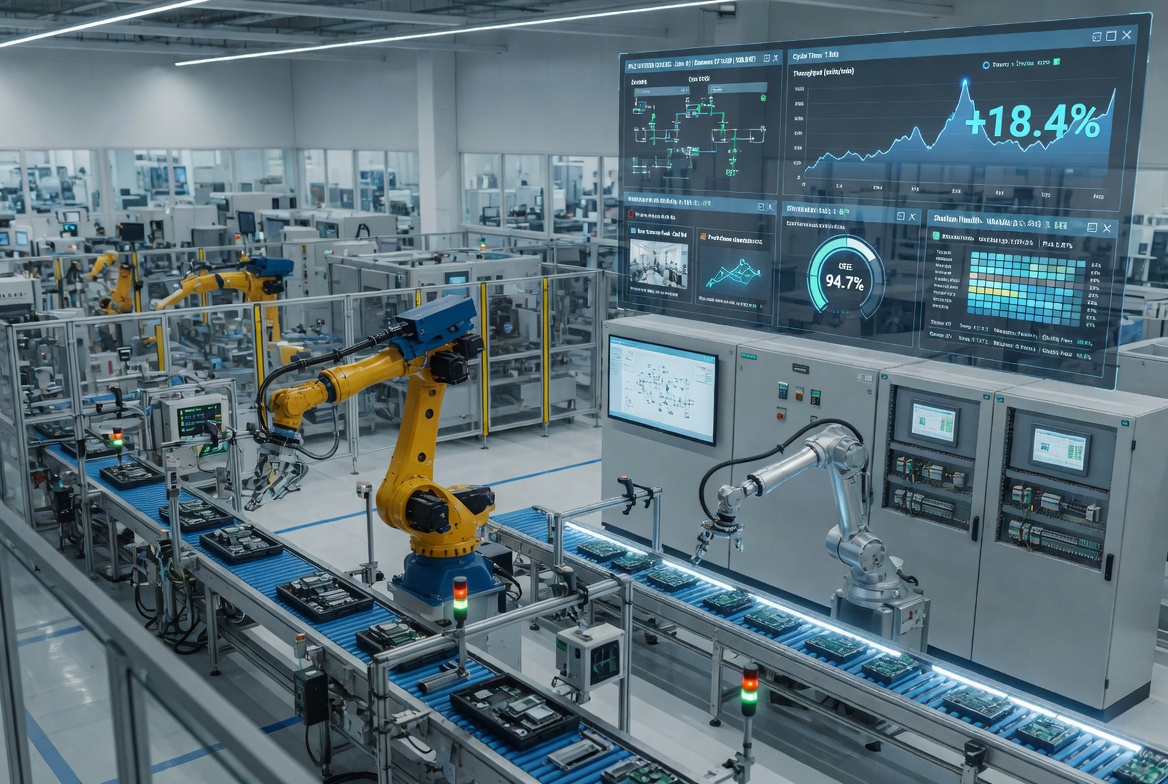
In today’s fiercely competitive manufacturing environment, businesses are constantly looking for ways to improve efficiency, reduce operational costs, and maintain consistent production quality. Industrial automation has become the foundational cornerstone for achieving these objectives.
From custom PLC programming and engineered control cabinets to full-scale systems integration, modern automated systems allow manufacturers to streamline complex processes, mitigate labor shortages, and stay resilient in volatile global markets.
This comprehensive technical guide explores how industrial automation systems work, their core economic and operational benefits, real-world cross-sector applications, and why PLC hardware remains the vital brain orchestrating modern production environments.
What is Industrial Automation?
Industrial automation refers to the coordinated application of control systems, digital logic, actuators, and sensory feedback to operate machinery and manufacturing processes automatically. Instead of relying on manual intervention, automated architectures utilize Programmable Logic Controllers (PLCs), Human-Machine Interfaces (HMIs), servodrives, and industrial fieldbus networks to govern machine kinematics with sub-millisecond precision.
The Closed-Loop Automation Cycle
An industrial automation loop functions continuously:
Proximity switches, load cells, vision cameras, and RTD temperature probes detect field conditions.
The central PLC executes cyclic logic scans, evaluates interlocks, and calculates motion profiles.
VFDs spin motors, pneumatic solenoids fire cylinders, and robotic grippers manipulate products.
The Role of PLC Systems in Modern Manufacturing
At the absolute heart of virtually every factory automation system lies the PLC (Programmable Logic Controller). Unlike standard desktop computers, PLCs are hardened industrial processors engineered to withstand severe electrical noise, mechanical vibration, wide temperature swings, and chemical washdowns without crashing.
Key Functional Capabilities of Industrial PLCs:
- Deterministic real-time machine execution
- High-speed analog and digital I/O processing
- Fail-safe safety logic & SIL3/PLe interlocks
- Interpolated multi-axis servo motion control
- Seamless industrial fieldbus connectivity
- Continuous system diagnostics & error traps
Major Industrial PLC Platforms We Engineer:
The European industry benchmark for high-speed deterministic control, PROFINET communications, and failsafe safety integrated architectures.
Renowned for legendary hardware reliability, ultra-fast instruction execution (0.98ns), and seamless CC-Link IE motion networking.
Extremely cost-effective all-in-one architectures combining rugged hardware, built-in colour touch HMI, and native cloud telemetry in a compact footprint.
Key Benefits of Industrial Automation
Implementing custom automation and engineered controls delivers measurable, quantifiable competitive advantages across modern manufacturing plants:
Increased Efficiency & Higher Throughput
Automated systems eliminate manual handling bottlenecks and maintain consistent cycle times 24 hours a day. By coordinating servomotors, variable speed drives, and robotic pick-and-place units, plants typically achieve a 25% to 40% increase in production throughput.
Reduced Unplanned Downtime
With continuous PLC I/O monitoring and predictive sensor feedback, emerging mechanical stress or electrical thermal anomalies are detected before catastrophic equipment failure occurs, drastically cutting costly emergency production halts.
Improved Product Quality & Repeatability
Deterministic PLC execution ensures sub-millisecond repeatability in dosing, cutting, welding, and packaging. Eliminating operator variability drives scrap and rejection rates down to near-zero levels across high-volume production batches.
Lower Long-Term Operational Costs
While automation requires initial capital investment, the reduction in labor overheads, material waste, rework cycles, and electrical energy consumption delivers rapid return on investment (ROI), typically within 12 to 18 months.
Enhanced Operator & Plant Safety
Integrated safety PLCs, optical light curtains, trapped-key interlocks, and emergency stop networks protect personnel from hazardous zones, ensuring full statutory compliance with BS EN 60204-1 and ISO 13849-1 (PL e / SIL 3).
Real-Time Telemetry & OEE Visibility
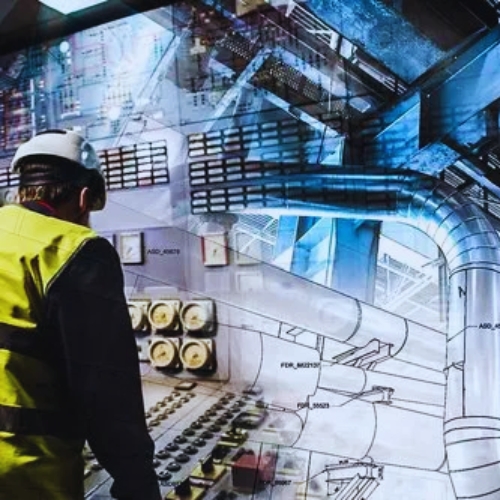
Modern industrial automation transforms machines into intelligent data sources. Cloud gateways and SCADA dashboards display live Overall Equipment Effectiveness (OEE), hourly output rates, and maintenance telemetry in real time.
Common Applications of Industrial Automation
Industrial automation is deployed across every major manufacturing discipline in the UK:
Machine Automation & Custom Equipment
Automating standalone specialized machinery (e.g. industrial wood chippers, lifting beams, and precision test rigs) to optimize operational safety and reduce operator intervention.
Production Line Automation
End-to-end synchronized conveyor lines, automated transfer shuttles, and pick-and-place gantry systems that balance takt time and eliminate intermediate work-in-progress (WIP) stockpiles.
Process Automation (Food & Pharma)
Hygienic valve routing, recipe dosing, and automated Clean-in-Place (CIP) systems ensuring strict compliance with UK food safety and pharmaceutical validation directives.
Automated Material Handling & Palletising
Automated guided vehicles (AGV), smart sorting conveyors, and multi-line robotic palletising cells that safely accelerate end-of-line packaging operations.
Types of Industrial Automation Systems
Industrial automation is classified into three overarching operational architectures:
Fixed Automation (Hard Automation)
Best For: High-volume, dedicated production with minimal product variation
Profile: Specialized tooling, high initial capex, lowest per-unit cost
Example: Continuous high-speed automotive stamping and glass bottling lines
Programmable Automation
Best For: Batch production where machinery produces varying product models
Profile: PLC recipe management, parameterized HMI inputs, structured changeover
Example: Food & dairy processing, pharmaceutical batching, and steel fabrication
Flexible Automation (Soft Automation)
Best For: Mid-to-high mix production demanding rapid, on-the-fly changeover
Profile: Multiaxis articulated robotics, automated guided vehicles, vision-guided feeds
Example: Automotive Tier 1/2 sub-assembly cells and e-commerce packaging hubs
The Critical Importance of Systems Integration & Remote Telemetry
Automation is never just about purchasing machines in isolation; it requires connecting disparate subsystems into one harmonious, synchronized plant architecture. Without seamless systems integration, islands of automation emerge that cause communication bottlenecks, inconsistent data, and operational blind spots.
Modern Remote Monitoring & Cloud IIoT
Contemporary control architectures connect plant-floor PLCs to secure edge gateways for continuous cloud telemetry. Through remote monitoring, engineering leaders access:
Upgrading Legacy Systems (Obsolescence Management)
A major challenge facing UK manufacturing is running critical machinery powered by obsolete, discontinued control hardware (such as Siemens S5, legacy Mitsubishi A/Q-Series, or Allen-Bradley SLC 500). When an aging controller or drive fails, replacement parts are either unobtainable or priced exorbitantly on secondary markets, risking weeks of catastrophic production stoppage.
How MASK Manages Planned Legacy Migrations:
Complete reverse-engineering of field wiring and legacy ladder logic.
Creation of modern EPLAN wiring schematics compliant with BS 7671.
Fabricating swing-frame backplates to fit existing cabinet enclosures.
Commissioning during planned shift shutdowns with zero production loss.
Choosing the Right Automation Partner
Selecting the right automation engineering firm is just as critical as choosing the hardware itself. The ideal partner should possess:
Objective hardware guidance tailored to your factory process, not manufacturer sales quotas.
Certified quality management (ISO 9001), calibration (ISO 17025), and inspection (ISO 17020).
Single-source responsibility from CAD concepts and panel build to site commissioning and 24/7 SLA support.
Demonstrated success with leading enterprises including Alstom, Babcock, and the UK Ministry of Defence.
Conclusion: Industrial Automation is a Necessity, Not a Luxury
Industrial automation is no longer an optional upgrade reserved for mega-corporations; it has become an indispensable requirement for survival and growth across modern UK manufacturing. By implementing robust PLC architectures, integrating connected fieldbuses, and embracing real-time monitoring, businesses safeguard uptime, cut operational costs, and build a resilient foundation for the next decade of production.
Ready to optimize your production line?
Speak directly with our UK systems engineering team to scope your PLC, control panel, or turnkey automation requirements.